Printable, dyslexia-friendly writing assignments for your fiddler (featuring Nora Schaefer and Nick Vujicic!)
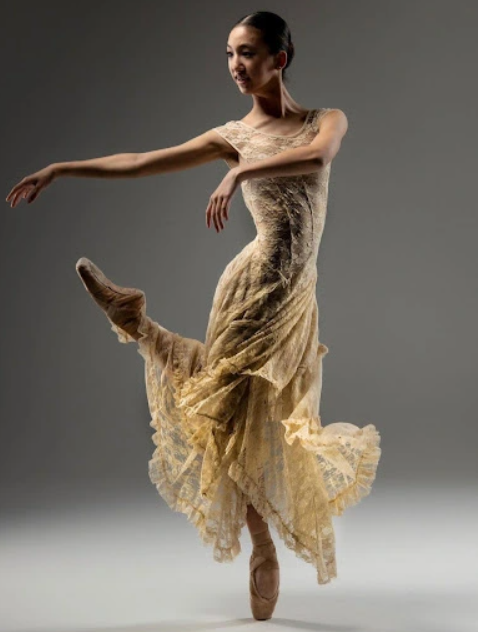
Lesson Plan: Use Nora’s story to Help your fiddlers plan and write their own Narrative Story!
Procedure:
Day 1-2: Review or teach the 8 elements of a story (setting, characters, conflict, rising action, climax, falling action, resolution, and theme).
Day 3: Have them identify the elements in Nora’s story by highlighting each element in the color indicated on the rubric/planner. (Read the story aloud and discuss it together if necessary!) Save the planner.
Day 4: Teach them how to use the right side of the planner to jot down the basic plot elements of their own true story.
Day 5: Read Nora’s story aloud again and ask the students what made it such an effective story. Write down and add to what they say. (She used description, transitions, suspense, etc…)
Day 6-7: Using their planners, have them begin to write their own stories.
Day 8: Before they turn it in, have them highlight all of the elements in their own stories in the appropriate colors. If they are missing one, they may go back and add it in. Every paper should include all of the elements!
Narrative Story Scavenger Hunt
Directions: Read Nora’s true narrative story. Then do the activity at the end of the story. (Hint: You will need to know that Pico de Gallo is a sauce you put on Mexican food.) If you would like to listen to Nora reading her story, click below!

Pico de Gallo
By: Nora Schaefer
His name was Pico de Gallo. We met him on what we thought was going to be an ordinary evening of watching TV and eating carry-out. My dad had gone out to Andy’s Restaurant to pick up dinner. As he left the house, my sister Phyllis reminded him NOT to get any Pico de Gallo sauce on her food because she didn’t like it at all.
Only a few minutes passed when my dad came back without the food. Instead, he held in his arms a fuzzy baby fox!
I instantly ran over and said, “Aww!! He is so cute! Can we keep him?”
Dad said in despair, “He has a family of his own — we have to help him find them!”
“Where did you find the little fox?” I demanded.
“He was right by the road in the woods, and it looked like he needed some help,” Dad explained.
Because the little fox was terrified, we locked our two dogs in another room. Then we got a crate and put a fluffy towel in it to make him comfortable, and, of course, we fed him. He didn’t drink any milk, so that was a sign that he had already stopped drinking his mother’s milk. We figured out that he must be about one year old. Even though he didn’t drink the milk, he gobbled up the chicken.
“What should we name him?” I asked.
“How about Pico de Gallo,” Dad said, “because as I left the house, someone shouted for me not to bring home Pico de Gallo. Well, it looks like I did anyway!”
We spent hours and hours getting all the ticks out of Pico’s fur. There must have been over a hundred! It was very late when we finally all went to bed. Pico slept in his crate in Phyllis’s and my room. Unfortunately, Pico was not comfortable in the crate, and he howled all night just like a lonely baby wanting its mother. Phyllis fell asleep at midnight, but Pico’s crying kept me up until 4:00 in the morning!
The next day, my mom called a wildlife expert and asked him what we should do with Pico. The expert told us to put the baby fox in a cardboard box that was low enough for the mama fox to get into, but too tall for the baby fox to get out of. He told us to put the box in the same place where my dad had found him. If the mama fox didn’t come back for him, we would have to take him to the experts, and they would ship him to a wildlife preserve.
The thought of shipping off Pico made me very sad! I hated the idea of him being separated from his mom and the world that he lived in before. Later on that morning, as we took him to the side of the road in his little box, we were hopeful that his mama would return. After saying goodbye to Pico, we drove off to dance class, wondering what would happen.
Four hours later we returned home…. and the box was destroyed! We figured that the mama fox must have come back for our little Pico. It turns out we were right! Several weeks later, my mom spotted him roaming around in our yard. And do you know what the best part of the whole story is? Pico de Gallo, our little fox, still lives in our yard to this day!
Now use the rubric on the next two pages to find and highlight all the elements in Nora’s Story!
Meet a Fiddler: Nora
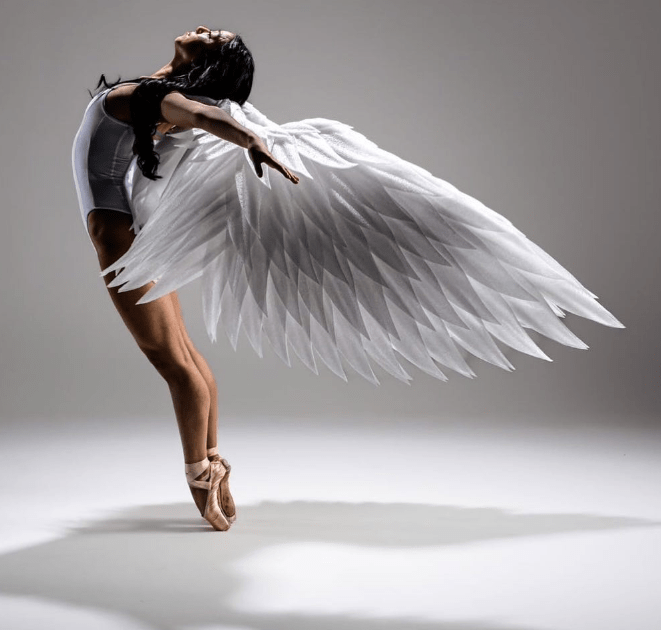
In addition to her story about Pico, Nora has written four children’s books about inspiring immigrant women; she interviewed a survivor of a Japanese internment camp, a refugee from Vietnam, and two adopted twins from the Ukraine. She also wrote her own memoir. Nora is creative, kind, insightful, adventurous, and very much like the angel-being in the picture. She brings joy to everyone she meets!
In addition to writing books, Nora has also been training to be a professional ballerina, and she now attends a ballet academy in England. She takes some of her classes online and others in person, and she is hoping to join a ballet company in the near future. She is an amazing dancer.
Click here to go to Nora’s page and watch her video!
Lesson Plan: Help your fiddlers plan and write their own REVERSE Poem!
Backward poems are designed to be read from top to bottom…and then again from bottom to top. They are a great way for kids to share the challenges they face due to dyslexia and then combat those challenges with the truth about their magical brains.
Procedure:
- Watch the video entitled “No Arms, No Legs, No Worries” by Nick Vujicic.
Link: https://www.youtube.com/watch?v=vAVbMggSU48
- After you watch the video, read the following poem to your students. Tell them that this is a poem that Nick could have written to describe the way he felt when he was in school. The poem was actually written by another author as an example.
- Talk about the tone of the poem after you read it from top to bottom.
- Then read it again starting from the bottom and reading it going up. Discuss the change in tone.
- Hand out the template (below) for the students to follow to write their own reverse poems about an area of life that is challenging for them. (This may include dyslexia and the emotional challenges that often accompany it!)
- Help them revise it until it sounds great in both directions.
Reverse Poem Template
I am (A label that could seem negative)
So you’ll never hear me say that
(Something positive you are afraid won’t happen)
I know in my heart that (Something negative)
And that
(Something negative you fear will happen)
I refuse to believe that
(Something positive you hope will happen)
I am (Something negative)
No longer can I say that
(Something positive)

Nick’s Poem (Written by Nancy)
I am broken.
So you’ll never hear me say that
I will live a full life.
I know in my heart that
I will never get married
And that
No one could ever love me.
I refuse to believe that
I can live a meaningful life.
I am a hopeless case
No longer can I say that
Life is worth living.
Now read the poem starting at the bottom and going up!
Lesson Plan: Help your fiddlers plan and write a Research Paper on the Dyslexic Advantage!
This project should be chunked and completed in steps over several weeks’ time.
Procedure for Taking Notes:
- For this project, each student will need a Google Doc with a chart like the one below. You will pre-populate it with relevant resources. (These are the same resources Wright used when he wrote his research paper to share facts about dyslexia with his school!)
- Watch the video for Source 1 with your students. Show them how to put it on the closed caption and pause the video to take notes.
- Remind them to write each note in their own words in separate cells. Show them how to add new cells to the chart if necessary.
- Continue taking notes for Sources 2 and 3 together, pausing to help them learn the difference between important and non-important information. Let them take turns pausing the video and rephrasing the information into their own words.
- By the time you have modeled this three times, they should be ready to take notes on their own for Source 4.
- Discuss their notes and make revisions if necessary.
- After all the notes are taken, print off their note charts and give each student a pair of scissors.
- Instruct them to cut apart the notes along the black lines. (Every rectangle, including the sources, will be cut out!)
- Tell your kids to mix them all up! Then teach them the meaning of the word “synthesize” (combining all the parts into a meaningful whole)
- Tell them that you would like them to put their notes into groups that make sense. Notes that are about similar ideas will be placed together in a group.
- Have them write each of the following topics on the very top of a sheet of 8.5 by 11 paper: Dyslexic Mind Strengths, Facts about Dyslexia and the Dyslexic Brain, Famous People with Dyslexia, and Sources
- Then have them read each cut-out note and place it on the paper where it fits best. Do not worry about putting the notes in any order.(If an note doesn’t “fit” in any of the categories, they may set it to the side for now.)
- Check to make sure their notes are in the right spots; explain and adjust if necessary.
- Tell your students that they will now organize the notes on each page in an order that makes sense. Show the students how to put the notes in a logical order where the ideas naturally flow from one idea to the next by modeling the skill out loud for them for the Dyslexic Mind Strengths category. Use a clear peace of tape to secure the notes in order.
- Have the students try to order the notes for the Facts about Dyslexia and the Dyslexic Brain page. After you have reviewed the order of the notes and they can explain their logical progression of thought, use a long strip of clear tape to secure the notes onto the page.
- Repeat with the Famous People with Dyslexia notes. Have them tape the Sources on the final page in alphabetical order.
Procedure for Structuring their Paper:
- Tell the students that their paper will have 5 paragraphs. They have already gathered information for 3 of them. They will also need to add on an introduction and conclusion. Give them two more pieces of paper and instruct them to write Introduction and Conclusion on the tops of the pages.
- On the introduction page, have them write
Hook
Thesis
3 Points in Order
3. Ask them to share the most powerful fact or quote they learned about the dyslexic advantage. Give them time to Google search quotes on the dyslexic advantage. Once they find one, have them write it on their introduction next to the word Hook.
4. Teach them that a thesis is just the main point they are trying to make in their paper. What is the main thing they learned from taking notes on dyslexia. In this case, brainstorm until you elicit a response similar to this:
Thesis: Although many people view dyslexia as a disadvantage, there are actually many amazing benefits to being dyslexic.
Have them write this on their paper next to Thesis.
5. Next, discuss the most effective order for the paragraphs (note pages). Which one should you start with? Why? Have them order their note pages in this order. Then have them list the three topics they will discuss in order in a simple sentence next to the words 3 Points in Order on their Introduction page. Remind them that the 3 points are just the headings on the note pages. (Here is a 3 Points sample sentence: Because of the unique wiring of the dyslexic brain, there are unique mind strengths that enable people with dyslexia to become very successful later in life.)
6.Follow the same procedure for the Conclusion paragraph. Tell them that the conclusion has the same ingredients as the introduction. Have them include the write the following on the Conclusion paper. (Do not have them complete the Conclusion until after they write the paper. You will get a much more effective Zinger 🙂
Restate the Thesis
3 Points in Order
Zinger (The conclusion does not have a hook–instead, it ends with a Zinger. A Zinger is a thought which connects back to the hook or makes the reader think.)
Procedure for Writing the Paper from Their Notes: (They may handwrite, use the computer, dictate, or use Speechnotes to write their papers.)
- Once they have their five pages of notes in order, they are ready to write their paper. Remind them that their papers will have 5 paragraphs, one for each paper.
- Using their Introduction note page, coach them to write their first paragraph. This will entail copying their hook, thesis, and 3 point in order sentences onto a new document and should be fairly easy. Congratulate them on completing their first paragraph.
- Show them how to indent and then use the notes they took on the first note page. For example, they may have decided to start their paper with Facts about Dyslexia and Dyslexic Brain Wiring. If so, have them use their well-ordered, taped-down notes to dictate sentences to you. (If you are teaching multiple students, you may want to use just one set of notes to make it easier.) Show them how to add transitions and combine sentences to make their ideas flow.
- Give them a chance to use the notes from their second paragraph (Dyslexic Mind Strengths) to write the second paragraph. Remind then to indent. If you have multiple students, you may want to give them a partner. If not, stay close by to answer questions and guide them.
- Assign the third paragraph and let them use the notes on Famous People with Dyslexia to write the paragraph independently (if they are able to).
- Using the points on the Conclusion note page (Restate the Thesis, 3 Points in Order, Zinger) to write the conclusion. Explain that they can find all of this information in their introduction but that they don’t want to copy it exactly.
- Explain that an effective Zinger leaves the reader with something to think about and connects back to the Hook. Have them look at the hook and generate possible responses. Then select a powerful Zinger together and write it at the bottom of their paper.
- Celebrate their hard work and beautiful papers!
- Teach them how to use Premium Grammarly to proofread it. They may also want to use Natural Reader to read it out loud to them.
- Have them copy and paste their sources into MyBib to create a Works Cited page.
| Source 1: What Are the Dyslexic Mind Strengths by Noticeability https://www.youtube.com/watch?v=f8ijgzZCjjw Put notes for Source 1 below (Write one idea/note in each rectangle. You may need to add cells!) |
| Source 2: Infographics: What is Dyslexia and Dyslexic Strengths shared by Denton Independent School District https://www.dentonisd.org/Page/74277 Write notes for Source 3 below. |
| Source 3: Dyslexics are more intelligent – Here is why – Hack Dyslexia by Nishantha Unantenne https://www.youtube.com/watch?v=ZyMU4cAMT6c (Note to the teacher: This is a kid-friendly source. For a more academic explanation see http://www.sci.utah.edu/~gerig/ITED08-Presentations/NohaElZehiryMICCAI_EarlyBrain.pdf) Write notes for Source 3 below. |
| Source 4: Dyslexia Explained: What’s It Like Being Dyslexic? Nessy https://www.youtube.com/watch?v=IEpBujdee8M Write notes for Source 4 below. |
Make sure they share their research with their parents and other teachers!
Photo Credits:
Fox: http://clipart-library.com/newimages/fox-clipart-black-and- white-17.jpg
Nora Ballet Photo: Stark Productions
 The Dyslexic Fiddler Crab